Next time you get your nails done, look at the person doing them. Really look. Not at the work. At them. Do they seem happy? Do they speak much English? Did they choose to be there?
I am not saying they didn't. Many nail technicians in this country are skilled workers doing a legitimate job. But some are not. Some were promised a job in a salon, paid a smuggler they will spend years repaying, and arrived in Britain to find the job was real but the freedom was not. They work. They do not get paid. They do not leave. There is a chapter in The Other Lotus Girl called "Beautiful Nails" in which Mrs Patterson has her hair and nails done and complains about very little, and the girls doing them have been through all of it. Nothing graphic. Nothing sensational. Nothing on the page at all.
The National Referral Mechanism figures
The Home Office counts this, after a fashion. In 2024 the National Referral Mechanism, the system a police officer or a social worker uses to flag a suspected victim, took 19,125 referrals. That is the highest annual figure since the NRM began, up from 16,990 in 2023. Nearly a third of them, 5,999, were children. Three quarters were male. Labour exploitation was the biggest single category at 6,153, the highest that has ever been recorded.
Vietnamese nationals accounted for 2,153. The year before it was 991. Nail bars. Cannabis farms. Sexual exploitation. It's happening in ordinary towns on ordinary streets, and most people walk past it without knowing.
I know this because I spent a long time researching it. My wife is Vietnamese. She was not trafficked and does not know anyone who was, but she understands it happens from her birth country and is horrified by it. She helped me understand Vietnamese culture and make the characters feel real.
The Other Lotus Girl, and the Vietnam to UK route
The Other Lotus Girl was my second novel, and a dual timeline. The past chapters follow Vân across twenty months and most of a continent, sold in warehouses, hidden in basements. The tone was the gamble: dry British humour on one page and a warehouse on the next.
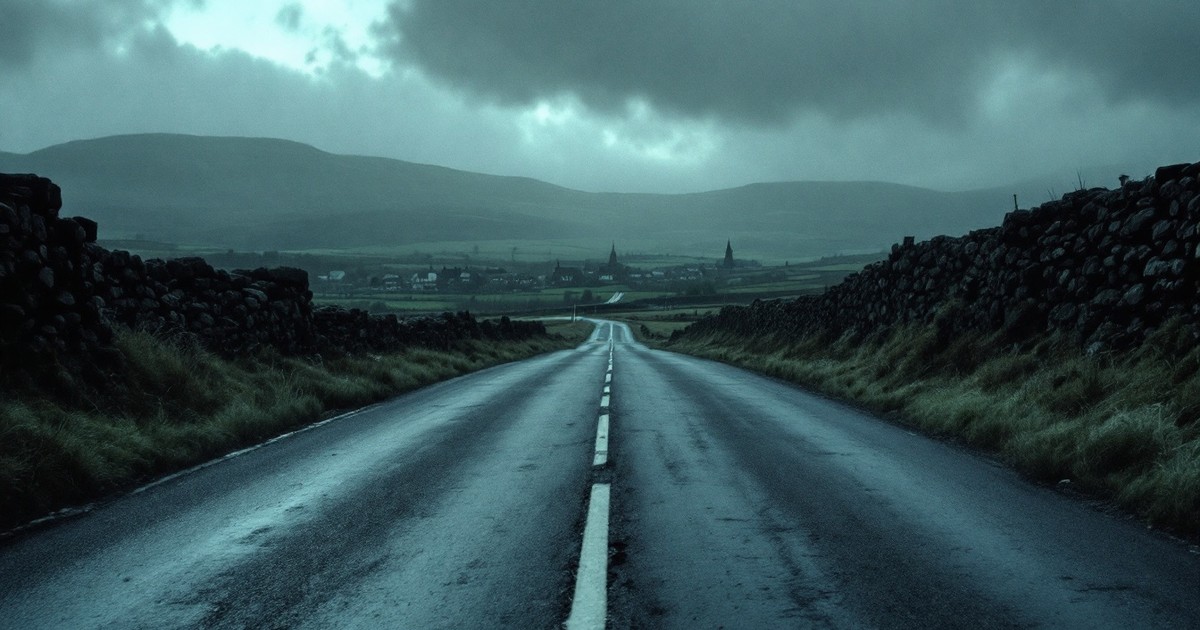
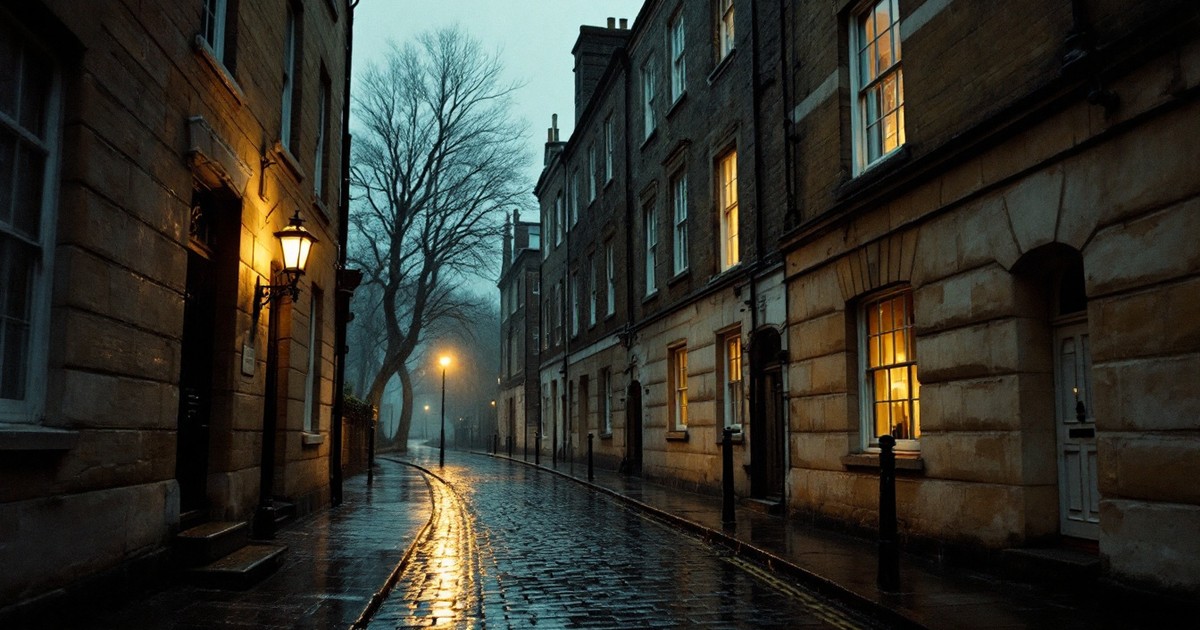
The rest of the present day is Guildford. Stuart was going out for Earl Grey when a terrified woman threw herself into his car. His husband Martin is trying to hold things together. Mrs Patterson is seventy-three, sharp-tongued, and carrying her own ghosts. John is well-meaning and out of his depth. They do not all agree about immigration. John hints at the idea that people come here to take advantage. Mrs Patterson has her own views. Then there is a girl in the back of the car who does not speak much English. This is wrong. She needs help. We are the only ones here.
The humour did not work for everyone. One reviewer called it a "slapstick chase scene," which stung, because it's not slapstick. It's British people dealing with fear the way British people deal with fear, which is badly, and with tea, and arguments about directions.
Most Vietnamese women in British nail bars came here under their own steam and are getting on with it. The 2,153 are the other ones. It is not a book about immigration. We judge too quickly that somebody came here to take advantage, when we have no idea what their life has been. Not all lives are lived the same.
19,125 is a number. This is not.
Eleven o'clock at night, and the woman in your passenger seat does not speak much English, and she is shaking, and she is begging you to drive. You would be out of your depth. So would I.
Trafficking in adult fiction
Trafficking turns up far less often in adult fiction than in nonfiction and memoir, and a good deal of what does exist is written for teenagers. Here are eight, mine included. Three are set wholly or partly in Britain, and I have left two more off that are: Ian Rankin's Fleshmarket Close (2004), in Edinburgh, and Kate Atkinson's Big Sky (2019), in Yorkshire.
The Other Lotus Girl by Daniel A. Riddle (2024)
Paperback ISBN 106847632X, hardback 1068476338. A finalist in the 2025 Wishing Shelf Book Awards, which are judged by readers, and a five-star review from Readers' Favorite. There is a free full-cast audio drama of it on Spotify, Apple Podcasts, Amazon Music and YouTube. Press play on Episode 1 before you spend anything.
Vân is promised a job in a nail salon. She escapes her handler in Guildford and throws herself into Stuart Henderson's car, and Stuart, Martin, John and Barbara Patterson end up the only people between her and the men who want her back. They are outmatched, unarmed, and driving a battered Nissan Micra.
Sold by Patricia McCormick (2006)
A 2006 National Book Award finalist for Young People's Literature. Thirteen-year-old Lakshmi is sold out of Nepal by her stepfather and ends up in Kolkata, in a brothel called Happiness House. It is written in free-verse vignettes, a few lines to a page. McCormick travelled to Nepal and India and interviewed women in Kolkata's red-light district and girls who had been taken out of it.
It is classified as young adult. Do not let that put you off.
The 2014 film was executive-produced by Emma Thompson, with Niyar Saikia as Lakshmi and Gillian Anderson as an American photographer. In 2007 Thompson co-curated Journey with Sam Roddick: seven shipping containers in Trafalgar Square, one survivor's account, walked through one container at a time. She is President of the Helen Bamber Foundation.
Purge by Sofi Oksanen (2008)
Published in Finnish as Puhdistus in 2008. Finlandia Prize that year, then the Prix Femina Étranger and the European Book Prize in 2010, after translation.
Estonia, 1992. Aliide Truu, elderly, finds Zara collapsed in her garden. Zara has been trafficked into prostitution in Berlin by Russian criminals. What connects the two women runs back through decades of Soviet-era betrayal and forced silence. Oksanen is Finnish-Estonian, and the weight of that is on every page.
A Walk Across the Sun by Corban Addison (2012)
The 2004 Boxing Day tsunami orphans two sisters, Ahalya and Sita, in Chennai. They are trafficked into a Mumbai brothel and separated. One is forced into sex work. The other is sent to Paris and then America as a drug mule.
Addison is a lawyer who volunteered with International Justice Mission and visited Indian brothels while researching it. John Grisham endorsed it, which the publicity described as the first novel he had put his name to. The sisters carry the book; the American plotline is thinner.
The Girl with the Louding Voice by Abi Daré (2020)
Fourteen-year-old Adunni, in rural Nigeria, is sold as a third wife and then handed on as an unpaid domestic servant to a wealthy Lagos family. It is written in an invented English of Daré's own. It won the Bath Novel Award in 2018 as an unpublished manuscript, two years before it reached the shops as a Waterstones Fiction Book of the Month.
Forced marriage and domestic servitude are trafficking too. It happens in kitchens, behind closed doors, in houses with nice gardens.
Dead Tomorrow by Peter James (2009)
Macmillan, and the fifth Roy Grace. Detective Superintendent Grace works back from bodies recovered off the Sussex seabed with their organs removed to a Romanian ring bringing Eastern European children into the UK for the black-market organ trade.
The Roy Grace books have sold more than eighteen million copies and became ITV's Grace. It is set in Brighton, twenty minutes from a pier and a Wetherspoons.
The Cellar by Minette Walters (2015)
Hammer. Muna was taken from a West African orphanage at eight and kept in a cellar in a London house by the family who brought her to England. Beaten, exploited, hidden. She is fourteen when it starts.
Muna is not passive. The US edition runs to 192 pages, the UK one to about 250, so it is short whichever you get.
The Lookback Window by Kyle Dillon Hertz (2023)
Dylan, a gay man in Brooklyn, was sex-trafficked as a teenager by a man who groomed him with promises of love. New York's Child Victims Act opened a one-year window in August 2019, later extended by a second year, in which survivors could bring civil claims that were otherwise time-barred. That window is the title.
Hertz has written publicly about being a survivor. There are not many male victims in this fiction.
So the next time you get your nails done, just ask how they are. It doesn't hurt, and you never know, it might help someone speak out.
Organisations doing the work
If you want to do something beyond reading, these organisations are doing the work:
Anti-Slavery International, founded in London in 1839 and the oldest international human rights organisation in the world. Its UK trafficking research includes Vietnamese victims.
Unseen runs the UK Modern Slavery & Exploitation Helpline: 08000 121 700, free and confidential, 24 hours a day, in over 200 languages.
The Salvation Army currently holds the UK Government's Modern Slavery Victim Care Contract for England and Wales, though that contract is being replaced. Referral helpline: 0800 808 3733.
ECPAT UK works specifically on child trafficking, and has done some of the clearest work on the Vietnam to UK route.
Hope for Justice was launched in 2008 at an event near Birmingham that drew almost 6,000 people, and is headquartered in Manchester. It worked with West Midlands Police, the National Crime Agency and the CPS on Operation Fort, the largest modern slavery prosecution in UK history.
Helen Bamber Foundation provides therapeutic care, medical documentation and legal protection for survivors of trafficking and torture. Emma Thompson is its President.
If you suspect someone is being trafficked or exploited, call the Modern Slavery Helpline: 08000 121 700. It is free, confidential, and available 24 hours a day.