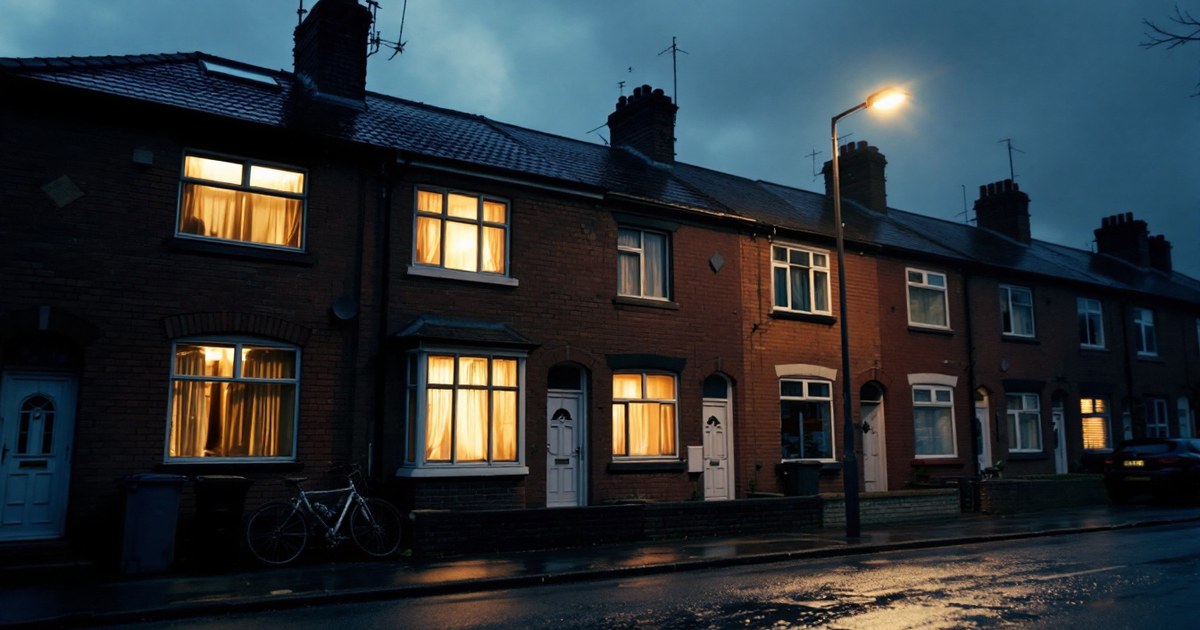
There is a house on your street where the curtains stopped opening. I did not make that image up. It is on a list.
The signs of cuckooing
Nottinghamshire Police publish the signs of cuckooing and they read like a street you already know. An increase in visitors, brief ones, at all hours. More vehicles arriving, bikes and mopeds and taxis. Takeaway boxes piling up outside. External doors propped open. Somebody moving out of the property while an unknown person stays.
"Cuckooing is hidden behind closed doors and victims can be reluctant to seek help because they often do not see themselves as victims or are under the control of violent offenders," says PC Carly Smith of the force's Sutton-in-Ashfield neighbourhood policing team. Which is why her force publishes that list at all. She wants neighbours looking, because a neighbour is closer to it than she is.
On 3 July her team reported five arrests across two investigations in Sutton-in-Ashfield. According to the force, one victim was a highly vulnerable man who had been befriended by people he gave small amounts of money to, then persuaded to hand over more, then his bank card. Then they moved in. He reported being forced to take drugs and to sleep on the floor of his own home, and said attempts were made to get him running drugs. Police said his television and phone were stolen. He told officers he had no freedom to do his own things and was not allowed to talk to anyone unless the suspects gave him permission. Officers changed the locks and rehoused him, and the force says he is happier now. The investigation remains ongoing and nothing has been proved in court.
Is cuckooing a criminal offence?
Until this year there was no crime called cuckooing. The Crime and Policing Act 2026 received Royal Assent on 29 April 2026 and creates a specific offence at section 65, carrying up to five years. It is worth being precise about this, because a lot of coverage is not: Royal Assent is not the same as being in force. At the time of writing the cuckooing provision is still awaiting commencement, so the practice continues to be prosecuted through other routes such as modern slavery, coercive control and drug supply law. The Home Office calls it "a highly exploitative practice where criminals seize control of a vulnerable person's home without consent to conduct illegal activities like drug dealing".
The anti-slavery charity Justice and Care was blunter about who ends up in that back bedroom. In written evidence to the Bill committee it described victims as "often vulnerable", some with drug, alcohol, physical or mental health problems, others elderly or with learning difficulties or other disabilities, all of which make them "easy targets".
How big the county lines problem is
The drug side is easier to count than the houses. The National Police Chiefs' Council recorded more than 6,500 county lines across England, Scotland and Wales in the year to March 2025, and 2,659 children involved in them, a number it says is probably an undercount. For children at risk it had to extrapolate: 25 of the 43 forces flagged 6,764 children as involved in or at risk of county lines who had also gone missing at least once that year, which scaled up to as many as 11,600 nationwide. Between July 2024 and March 2026 the Government's county lines programme closed 4,556 lines and made 12,697 arrests. On seized homes the Government says it holds no central data, and PC Smith's phrase explains why: hidden behind closed doors, by victims who do not file themselves under victim.
So I went looking for the novels, and there are not many.
What I found on the shelf, and what I didn't
I found seven by other people worth putting in front of an adult reader, and one of those is not really about the subject. Six, then, for a crime that now carries five years and runs on six and a half thousand active drug lines. My own two are on the list as well, flagged as mine.
The pattern was familiar from the last time I wrote one of these lists. Plenty of nonfiction. A good deal of policy writing. The fiction that exists is often written for teenagers, and where it is written for adults it usually arrives inside a police procedural, where county lines supplies the case rather than the subject.
Most of the fiction that reaches readers is written from the child's side. The runner, the groomed teenager, the boy on the train with a bag he has been told not to open. That is where the damage is most visible, so that is where the novels go. Cuckooing has two victims, though, and the second one is much harder to find. Matt Brolly's The Lines, out in 2025, gets cuckooing onto the page, but it does it through a detective. What I could not turn up anywhere is the woman in the back bedroom, being polite to the men in her living room, told from where she is sitting.
So that is the book I wrote. I am not claiming to be first, because I have not run a bibliographic survey and somebody will always know an obscure title I don't. I am saying I went looking for company on the shelf and found very little.
The books
The Cuckoo House by Daniel A. Riddle (2026)
Book 2 of The Other Lotus Girl. Twenty-three chapters, just under a hundred thousand words. Ebook £3.99 direct from this site, or on Amazon UK. Paperback and hardback in the UK. Mine, so take it with whatever grain of salt you think it deserves.
Mai is still out there. The search pulls the same found family into cuckooing and county lines, and into a house that is not what it seems. It works on its own if you have not read the first one.
The Other Lotus Girl by Daniel A. Riddle
Book 1. Paperback ISBN 106847632X, hardback 1068476338. Ebook £3.99, paperback £11.95, hardback £17.99. Wishing Shelf Book Awards finalist, and a Readers' Favorite five-star. Also mine.
This is where Mai's story starts, and it is trafficking rather than cuckooing, so it is on the list for the same reason Blacklands is further down: not the subject itself, but the ground the subject grows out of.
It also exists as a free full-cast audio drama, on Spotify, Apple Podcasts, Amazon Music and YouTube. If you have no idea whether my writing is for you, that is the cheapest way to find out. Press play on Episode 1. It costs you nothing.
All That We've Got by Jendella Benson (2024)
Trapeze, July 2024, 432 pages in hardback. Trapeze is an Orion imprint at Hachette, and its copy pitches the novel as being about "the real people behind the lurid headlines". Benson is British-Nigerian, raised in Birmingham, and her debut Hope & Glory came out in 2022.
Mimi is in her twenties with a child, trying to get clear of her family's judgement and her church's gossip. Abi is fifteen and wants what she sees on her phone, and wants to help her mum with the bills. Local boys offer her quick money. She takes it, and so do her friends.
If you read one book on this list that is not mine, read this one. It is the closest thing I found to a literary treatment of county lines from inside a family rather than inside an investigation.
The Misper by Kate London (2023)
Corvus, 3 August 2023. Corvus is Atlantic's crime list, and Atlantic's page says the book explores "the devastation that organized drug-running gangs can wreak on young lives". London served as a Met detective before she published a word of fiction.
A missing teenager, and police pulled into a county lines network. Misper is the police word for a missing person. It is what a frightened child becomes on a form.
Crossing the Line by Tia Fisher (2023)
Hot Key Books, 2023. I paid £3.99 for it on Kobo on 25 July while I was writing this. It is a verse novel, it took the Yoto Carnegie Shadowers' Choice Award, and it was a Times Children's Book of the Year.
Erik is fourteen, and his dad has died. School stops mattering. The wrong people notice, and he ends up running drugs.
Written for teenagers. Do not let that put you off: the restraint that comes with writing for younger readers usually makes this kind of story land harder rather than softer.
The Silent Suspect by Nell Pattison (2021)
Avon, 29 April 2021. Third in the Paige Northwood series. Paige is a hearing British Sign Language interpreter and a child of deaf adults, which is a different vantage point from either side.
A murder case that runs into a county lines operation and into the exploitation of the deaf community. Language, disability, age, addiction: people get chosen because reporting is hard for them, which is the thing Justice and Care said out loud and fiction mostly skips.
Find Them Dead by Peter James (2020)
Macmillan, 2020. The sixteenth Roy Grace novel, well into a series Peter James is still adding to.
The engine of the plot is juror intimidation; the county lines operation, in Brighton, is the machinery standing around it. The Roy Grace books have sold more than eighteen million copies, which is frankly the only reason this one is on the list. Reach counts for something.
Cuckoos on the Mersey by Conrad Jones (2023 onwards)
Independently published, four novels between 2023 and 2025.
Merseyside police and social workers against a network that exploits a teenager and takes over vulnerable people's homes. Book one turns on a sixteen-year-old called Leo. It is the only series I found with cuckooing in the title, and it treats the seized house as the crime rather than the setting.
Check which instalment you are buying, because the subtitles run together in the listings.
Blacklands by Belinda Bauer (2009)
Bauer's debut, and it won the CWA Gold Dagger in 2010. Not a county lines novel. It is here for what it knows about grooming.
Twelve-year-old Steven Lamb digs holes on Exmoor looking for the body of an uncle he never knew, and writes to the man who killed him. Change the details and you have the first conversation between a county lines recruiter and a boy whose dad has died.
If you want to do something beyond reading
Helplines and reporting
Nottinghamshire Police ask anyone worried about cuckooing to ring 101, and 999 if it is an emergency. Every force says the same.
Crimestoppers is a charity and not part of the police, which is the whole point of it: 0800 555 111, and it does not take your name.
The Modern Slavery and Exploitation Helpline, run by Unseen, is 08000 121 700, twenty-four hours a day, in more than two hundred languages, and criminal exploitation of children sits inside its remit.
Fearless is Crimestoppers' youth service, aimed at 11 to 18 year olds who would rather not go to the police directly.
Catch22 runs specialist county lines support in London, the West Midlands, Merseyside, Greater Manchester and West Yorkshire, with related child exploitation services in other English areas, so check what covers you.
Hourglass takes calls about the abuse of older people, including coercion inside their own homes, on 0808 808 8141.
The signs again, from the Nottinghamshire list: brief visitors around the clock, more vehicles, bikes and mopeds and taxis, litter and takeaway boxes accumulating, external doors propped open, and somebody moving out of the property while an unknown person stays.
"Once members of the public learn the signs, it may be obvious to them that a neighbouring address in their community is being cuckooed that could otherwise be difficult for the police and partner agencies to identify," PC Smith says.